
Alexander & Sons Blog
Why Your Patio Gets Too Hot in the Summer (And How to Fix It)
You finally have the backyard you’ve always wanted.
A beautiful patio. Comfortable furniture. A place to relax, entertain, or enjoy dinner outside.
Then summer arrives.
By early afternoon, the patio is almost too hot to walk across, the furniture is uncomfortable to sit on, and instead of spending time outdoors, everyone heads back inside.
If this sounds familiar, you’re not alone.
Several factors influence how hot a patio becomes, and fortunately, many of them can be addressed during the design process—or improved later with thoughtful upgrades.
Here’s why your patio heats up so much in the summer and what you can do to make it more enjoyable.
1. Direct sunlight all day
The biggest reason patios become uncomfortable is simple: constant sun exposure.
Many backyards receive six to ten hours of direct sunlight during the summer, especially in California.
Without shade, hardscape materials continue absorbing heat throughout the day, often reaching temperatures much higher than the surrounding air.
How to help
Adding shade can dramatically improve comfort.
Options include:
- Pergolas
- Patio covers
- Shade sails
- Large umbrellas
- Strategically placed trees
Even partial shade during the hottest part of the afternoon can make a noticeable difference.
2. Dark-colored materials absorb more heat
Color plays a much larger role than many homeowners realize.
Dark gray, charcoal, and black hardscape materials absorb significantly more solar heat than lighter-colored surfaces.
That doesn’t mean dark materials should always be avoided—but it’s something worth considering during the planning stage.
How to help
If keeping your patio cool is a priority, consider:
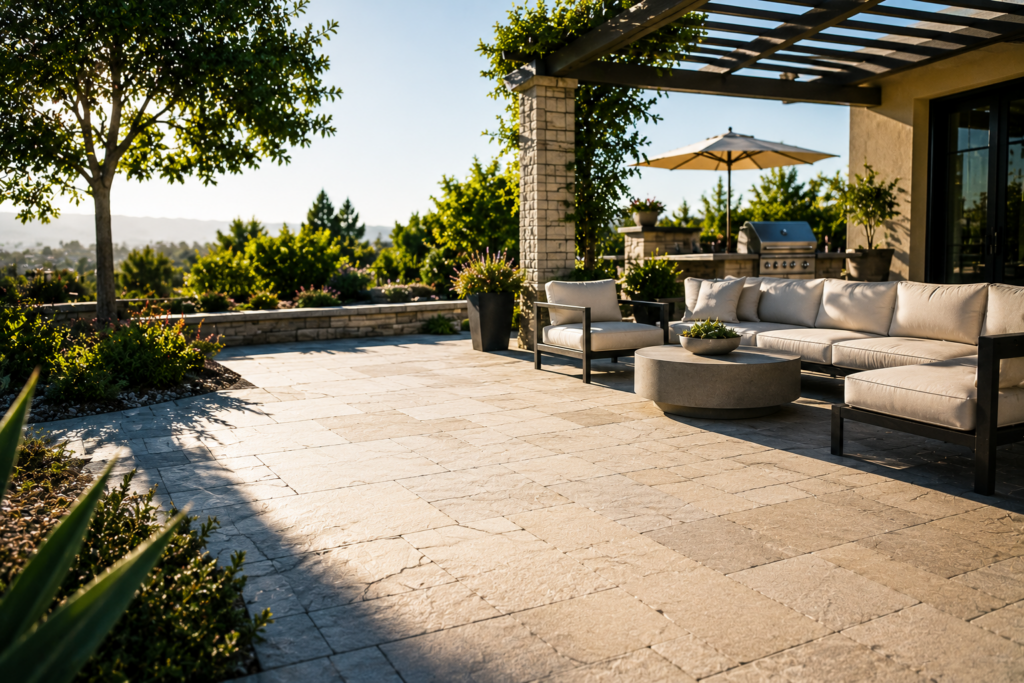
- Light gray pavers
- Beige tones
- Natural stone with lighter color variations
- Warm neutral colors
These materials reflect more sunlight and generally remain more comfortable underfoot.
3. Some materials naturally retain more heat
Not every patio material behaves the same way.
Dense materials can continue holding heat long after the sun begins to set.
While appearance often influences material selection, comfort should also be part of the conversation.
Concrete pavers, natural stone, and other hardscape materials all have different thermal characteristics, making it worthwhile to discuss options with your contractor based on how you plan to use the space.
4. Your patio may not have enough shade
Many homeowners focus on the patio itself but overlook what surrounds it.
A patio without nearby trees, landscaping, or overhead structures receives constant exposure from every direction.
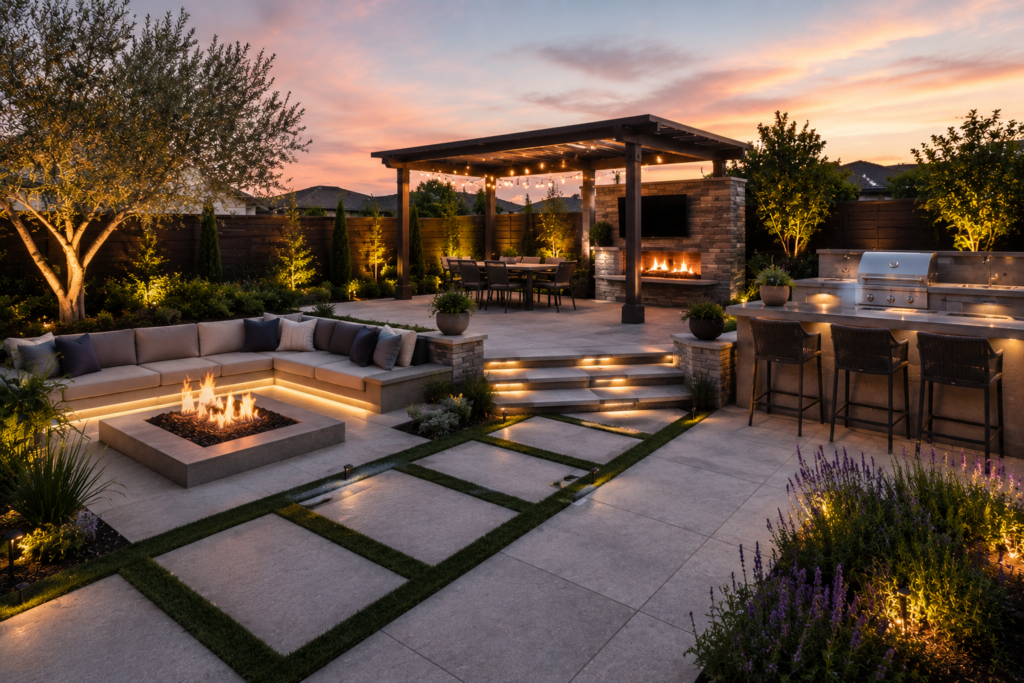
Thoughtfully designed shade not only cools the surface but also creates a much more inviting outdoor environment.
As trees mature, they can naturally lower temperatures while adding beauty and privacy.
5. Heat reflects from surrounding surfaces
Your patio isn’t only absorbing sunlight from above.
Heat also reflects from:
- Stucco walls
- Fences
- Windows
- Concrete surfaces
- Nearby structures
These surrounding elements can increase temperatures, particularly during the late afternoon.
Considering the entire backyard—not just the patio—often leads to a more comfortable design.
6. Limited airflow can trap heat
Sometimes the issue isn’t the patio surface at all.
Tall fences, dense landscaping, and enclosed outdoor spaces can reduce airflow, allowing heat to build throughout the day.
A backyard with good ventilation often feels noticeably cooler, even when temperatures are similar.
When planning a patio, it’s worth thinking about how air naturally moves through the space.
7. Landscaping can make a bigger difference than you think
Plants do more than improve curb appeal.
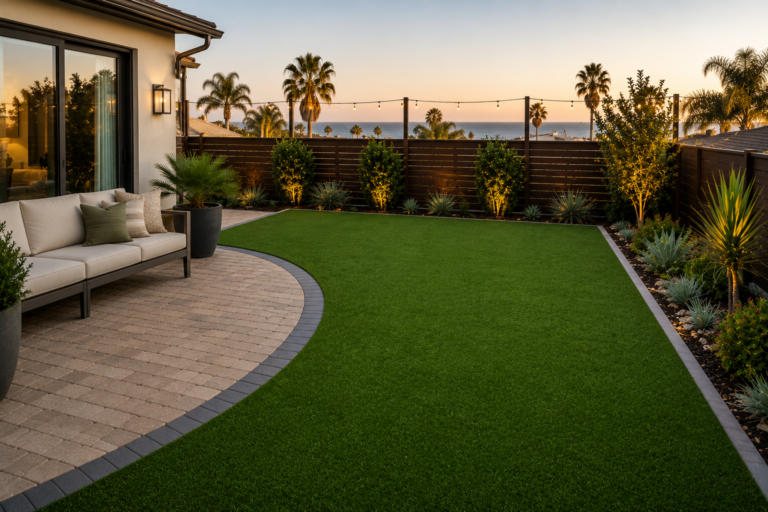
Trees, shrubs, and surrounding greenery help cool outdoor environments by providing shade and reducing reflected heat.
A well-landscaped backyard often feels significantly more comfortable than one surrounded entirely by concrete or stone.
Combining hardscape with thoughtfully placed landscaping creates a backyard that’s both beautiful and functional.
8. Planning for comfort is just as important as choosing materials
One of the biggest misconceptions about patios is that material alone determines comfort.
In reality, it’s the combination of factors that matters:
- Sun exposure
- Shade
- Material color
- Drainage
- Airflow
- Landscaping
- Overall layout
When these elements are planned together, the result is a patio that’s enjoyable throughout much more of the year.
Simple ways to create a cooler patio
If you’re planning a new patio or updating an existing one, these improvements can make a noticeable difference:
- Incorporate permanent or flexible shade.
- Choose lighter-colored pavers or natural stone.
- Plant shade trees where they’ll benefit the space over time.
- Create open areas that encourage airflow.
- Balance hardscape with landscaping.
- Design the layout around how the sun moves across your yard.
Small changes often have a surprisingly large impact on comfort.
A patio should invite you outside—not drive you indoors
A great patio isn’t just about how it looks—it’s about how it feels on a warm summer afternoon.
By thinking beyond materials and considering shade, airflow, landscaping, and layout, you can create an outdoor space that’s comfortable, functional, and enjoyable even during California’s hottest months.
If you’re planning a new patio or backyard renovation, visiting the Alexander & Sons showroom in Campbell is a great way to compare materials, explore design ideas, and discuss how to create an outdoor space that’s as comfortable as it is beautiful. Showroom visits are available by appointment.
Welcome to the
Alexander & Sons Blog
From patios to driveways, your source for expert concrete and hardscape advice in Campbell, Los Gatos, Palo Alto, and beyond.