
Alexander & Sons Blog
How Long Does a Paver Patio Last? (And How to Make It Last Longer)
A properly installed paver patio typically lasts 25 to 50 years, and in many cases even longer, depending on the quality of installation, the base preparation, and how well it’s maintained over time. Unlike poured concrete, which cracks as one solid slab, individual pavers can be replaced one at a time — which is a big part of why they tend to outlast other patio materials.
The real answer isn’t just about the pavers themselves. It’s about what’s underneath them.
What Actually Determines a Paver Patio's Lifespan
1. Base Preparation
This is the single biggest factor. A patio built on a properly compacted gravel base with the right depth for Bay Area soil conditions will resist the shifting, sinking, and cracking that shortens the life of a rushed installation. Skipping this step — or under-compacting the base — is the most common reason paver patios fail early.
2. Installation Quality
Correct paver spacing, edge restraints, and polymeric sand in the joints all keep the surface locked together. Without solid edge restraints, pavers can spread apart over time, especially with soil movement common in South Bay clay soils.
3. Drainage
Pavers that aren’t sloped correctly for drainage can allow water to pool and erode the base beneath them. Good installers grade the patio to direct water away from the house and any low points in the yard.
4. Material Quality
Not all pavers are the same. Higher-density concrete or natural stone pavers hold up better to freeze-thaw cycles (less of a concern locally) and UV fading than lower-grade, budget options.
5. Maintenance Over Time
Even a well-built patio needs occasional upkeep to hit the higher end of its lifespan.
Here is another one of our posts that we think you’ll find informative: Before You Add Pavers: 5 Mistakes Homeowners Don’t Realize They’re Making
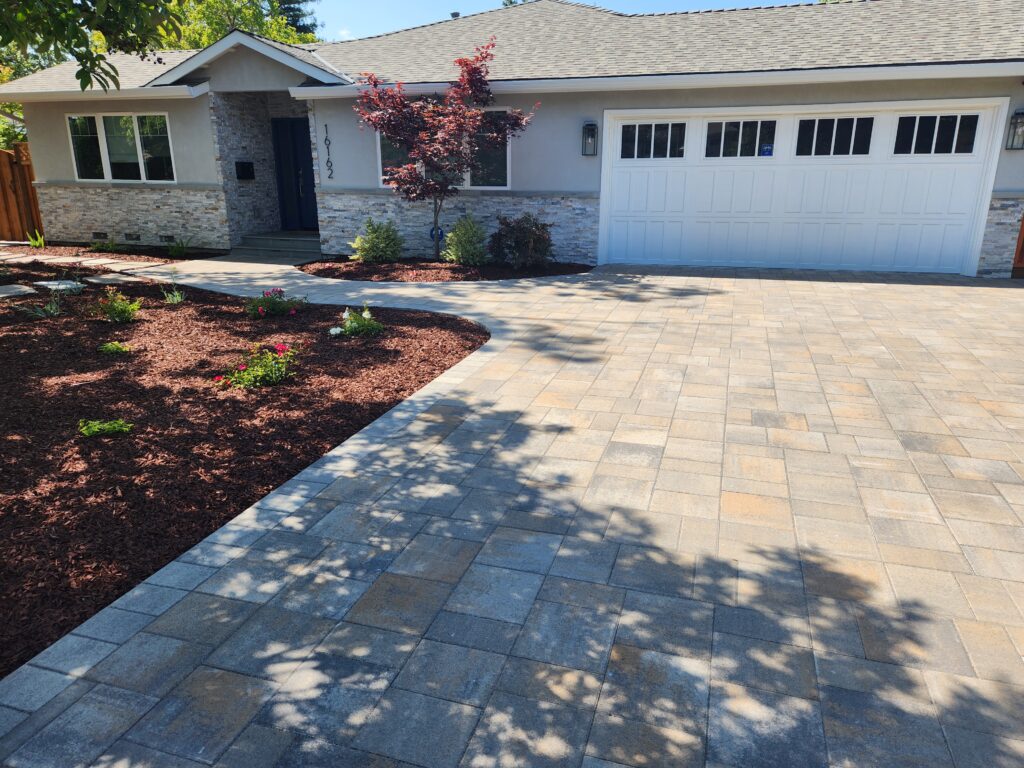
How to Make Your Paver Patio Last Longer
- Reapply polymeric sand every few years as joints wear down from foot traffic and weather
- Reseal the pavers every 2-3 years to protect against staining and fading, especially in high-sun areas
- Pull weeds early — left unchecked, weeds can work their way under pavers and disrupt the base
- Address settling quickly — if you notice a low spot or a paver that’s shifted, get it fixed before it spreads to surrounding pavers
- Keep drainage clear — make sure nearby landscaping or debris isn’t blocking water flow off the patio
Signs Your Paver Patio Needs Attention
If you’re seeing pavers that rock underfoot, noticeable gaps between joints, pooling water after rain, or sunken sections, these are early signs the base has shifted — not necessarily a sign you need a full replacement. Most issues at this stage can be repaired by resetting the affected area rather than redoing the whole patio.
Is it time to replace your patio or driveway? Find out here: 3 Signs It’s Time to Replace Your Patio or Driveway
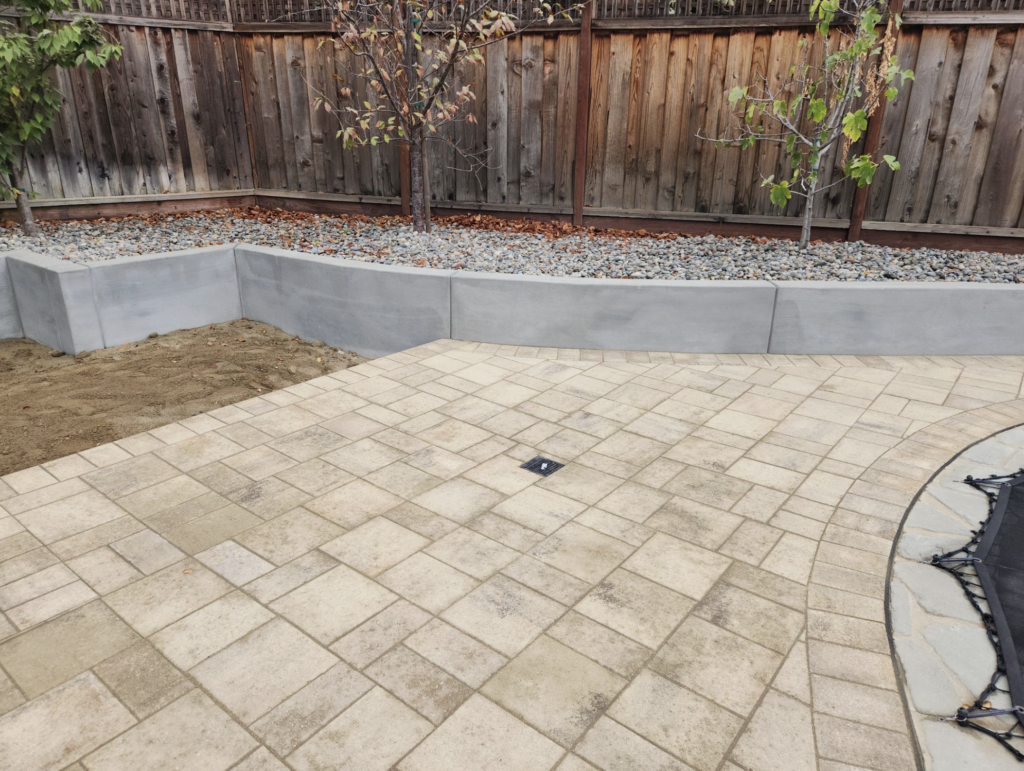
Pavers vs. Poured Concrete: Lifespan Comparison
Poured concrete patios typically last 20-30 years before major cracking sets in, and repairs usually mean patching or replacing large sections since it’s one continuous slab. Pavers, by contrast, can be repaired paver-by-paver, which is why well-maintained paver patios often outlast concrete in the long run.
Stamped Concrete vs. Pavers: Which is Better for Bay Area Homes?
Built to Last in the South Bay
At Alexander & Sons, base preparation isn’t a step we rush — it’s the foundation (literally) of every patio we install. We’ve been building patios, driveways, and outdoor living spaces across Campbell, San Jose, Los Gatos, and the South Bay for over 20 years, and we stand behind our installations because we know what holds up here and what doesn’t.
Thinking about a new patio, or want us to take a look at an existing one? 📞 (408) 515-2525 — Free estimates 📍 Serving Campbell, San Jose, Los Gatos & the South Bay
FAQ
Do pavers last longer than concrete? Well-installed pavers generally last longer than poured concrete because individual pavers can be repaired or replaced without redoing the entire patio, while concrete tends to crack as one slab.
How often should you reseal a paver patio? Most paver patios should be resealed every 2 to 3 years to protect against fading, staining, and joint sand erosion, though high-sun areas may need it sooner.
Why do paver patios sink or shift? Sinking or shifting is almost always caused by inadequate base compaction during installation or drainage issues that erode the base over time.
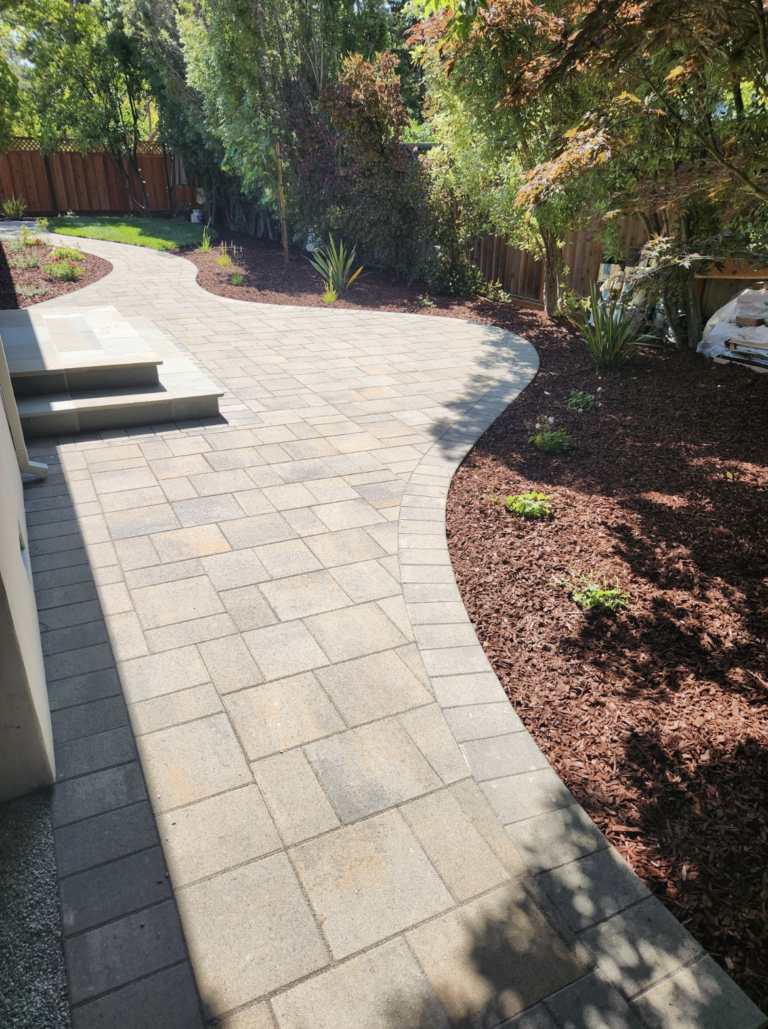
Built to Last in the South Bay
At Alexander & Sons, base preparation isn’t a step we rush — it’s the foundation (literally) of every patio we install. We’ve been building patios, driveways, and outdoor living spaces across Campbell, San Jose, Los Gatos, and the South Bay for over 20 years, and we stand behind our installations because we know what holds up here and what doesn’t.
Ready to see it for yourself? Whether you’re planning a brand-new paver patio or want a second opinion on one that’s starting to shift or sink, our team is happy to walk you through it. Stop by our Campbell showroom to see paver colors, patterns, and finishes in person — photos never quite capture how a material actually looks in real Bay Area sunlight — or give us a call to set up a free, no-pressure estimate at your home.
📞 (408) 515-2525 — Free estimates 📍 Showroom: Campbell, San Jose, Los Gatos & the South Bay 🕐 Showroom hours: Tue–Thu, 12–3pm
Welcome to the
Alexander & Sons Blog
From patios to driveways, your source for expert concrete and hardscape advice in Campbell, Los Gatos, Palo Alto, and beyond.