
Alexander & Sons Blog
Concrete Pavers, Natural Stone, or Flagstone: What's the Difference and When to Use Each
If you’re planning a patio, walkway, or driveway project and have started researching materials, you’ve probably run into all three of these terms — sometimes used interchangeably, which doesn’t help. They’re actually quite different materials with different strengths, looks, and ideal applications.
Here’s a clear breakdown so you can walk into any conversation with a contractor knowing exactly what you’re talking about.
Concrete Pavers
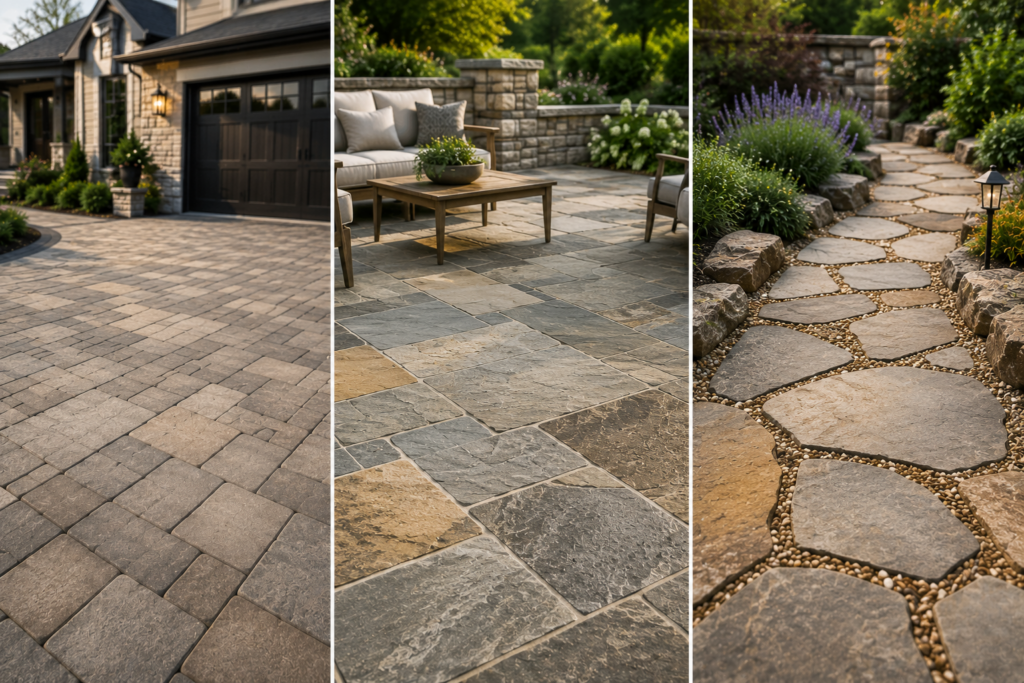
Concrete pavers are manufactured units — made from a mix of cement, aggregate, and pigment, then compressed under high pressure. They come in consistent sizes, shapes, and colors, and are designed to interlock.
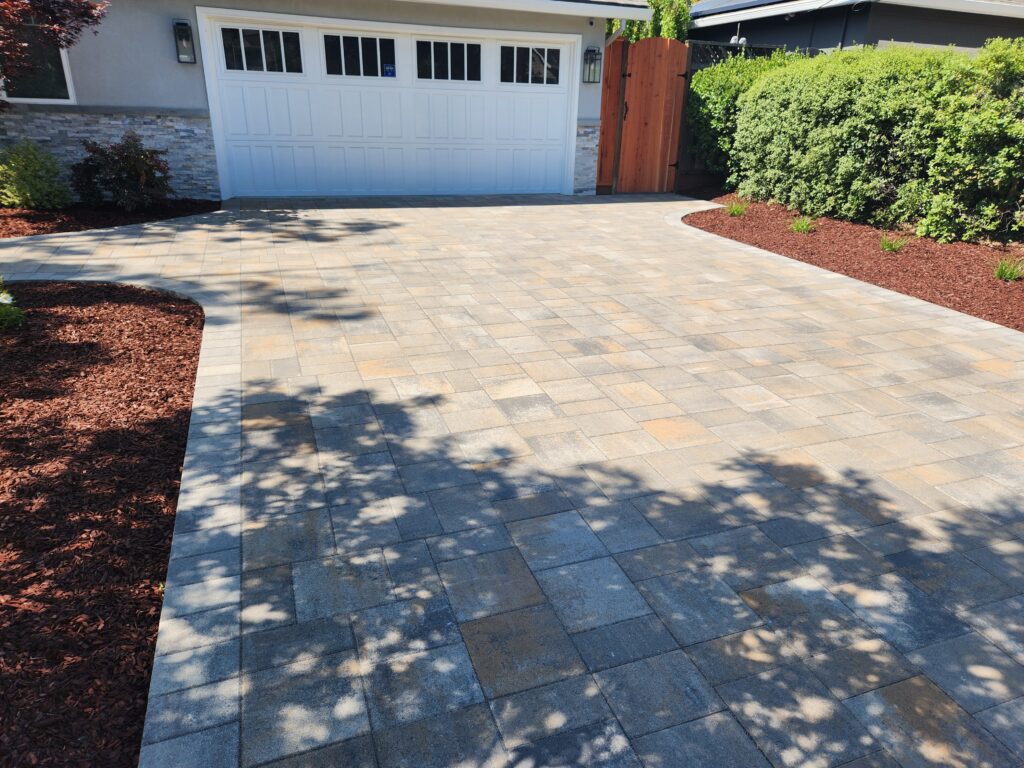
What they’re good for: driveways (concrete pavers handle vehicle weight extremely well, especially in herringbone pattern), large patios where you want a uniform clean look, and projects where you want a wide variety of color and style options.
What to know: concrete pavers are consistent and predictable, which is actually a feature for most projects. They’re manufactured to tight tolerances, which makes installation precise and the finished surface very even. Over time some color fading can occur, but quality pavers hold up well for decades.
Natural Stone Pavers
Natural stone pavers are cut from actual quarried stone — most commonly granite, travertine, bluestone, or slate. Each piece is unique, with natural variation in color, tone, and texture that can’t be replicated in manufactured materials.
What they’re good for: patios and outdoor living areas where you want a high-end organic look, pool decks (travertine in particular stays cool underfoot and has a naturally non-slip texture), and homes with existing natural stone elements where you want the hardscape to match.
What to know: natural stone requires more care than concrete pavers. Some stones are more porous and benefit from sealing. Installation takes more skill because pieces aren’t uniform and require fitting. The tradeoff is a finished product that genuinely cannot be mistaken for manufactured material — it has depth, character, and presence that ages beautifully.
Flagstone
Flagstone is a type of natural stone — specifically flat slabs of sedimentary rock like sandstone, limestone, or slate — used in irregular, large-format layouts. It’s what most people picture when they think of a casual, naturalistic garden path or a relaxed patio with ground cover growing between the joints.
What it’s good for: garden paths and walkways through landscaping, informal patios with a natural organic feel, spaces where you want plantings (thyme, moss, clover) growing between joints, and yards with a relaxed California garden aesthetic.
What to know: flagstone is typically set in a dry-laid or mortared pattern with irregular spacing rather than tight interlocking joints. The surface is inherently less uniform than pavers, which is the point. It’s not the right choice for driveways or heavy-traffic areas, but for the right setting it’s one of the most beautiful things you can put in a yard.
So Which One Is Right for Your Project?
The short answer: it depends on the application, the aesthetic you’re going for, and how the material fits the rest of your property.
- Driveway → concrete pavers are usually the answer
- High-end patio or pool deck → natural stone deserves serious consideration
- Garden path or informal outdoor space → flagstone might be exactly right
- Large entertaining patio → concrete pavers with the right color and pattern can look exceptional
We work with all three materials and can show you examples of each in our Campbell showroom. The best way to figure out what’s right for your specific yard is to have an experienced eye look at the space.
Call (408) 515-2525 or visit alexandersons.com to schedule your free estimate. We’re also at 1554 La Pradera Dr, Campbell — come by and see the materials in person before you decide.
Welcome to the
Alexander & Sons Blog
From patios to driveways, your source for expert concrete and hardscape advice in Campbell, Los Gatos, Palo Alto, and beyond.