
Alexander & Sons Blog
Is Artificial Turf Worth It? What South Bay Homeowners Actually Want to Know
If you’ve been thinking about replacing your lawn with artificial turf, you’ve probably already Googled it — and come away with more questions than answers. Is it hot in the summer? Does it look fake? How long does it last? What’s involved in getting it installed?
After installing turf for hundreds of homeowners across Campbell, San Jose, Los Gatos, and Saratoga, here are the honest answers to the questions we hear most.
Does It Look Fake?
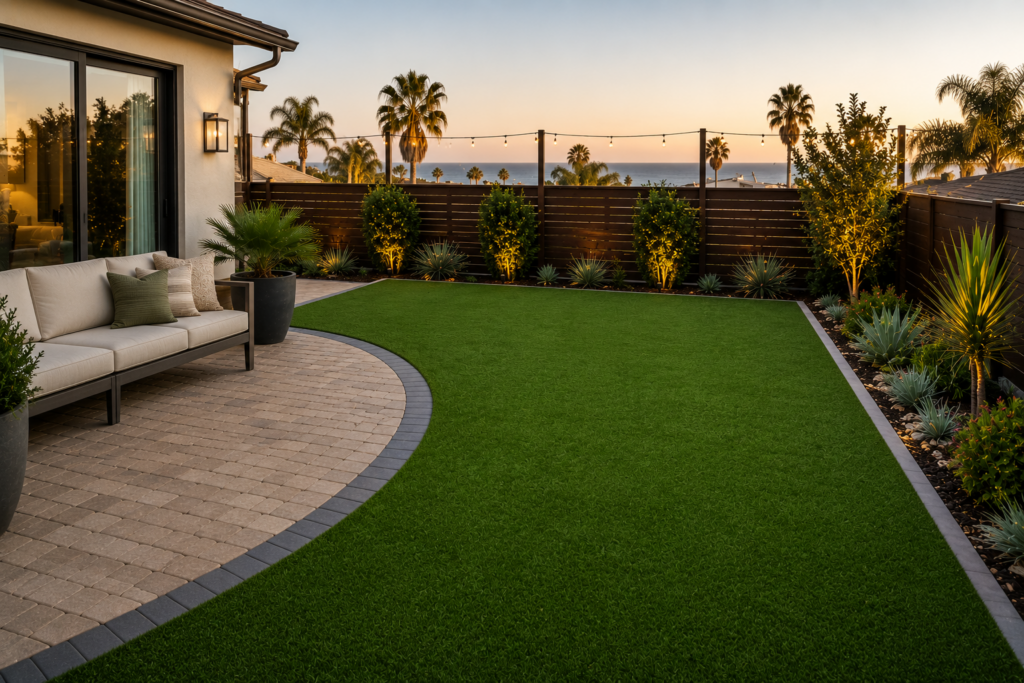
Early-generation turf had a plastic sheen and a uniformity that was hard to miss. Today’s turf is genuinely different. Modern artificial grass uses multi-tone blade colors, varying blade heights, and a thatch layer underneath that creates the irregular, lived-in look of a real lawn.
The honest truth: most guests won’t know unless you tell them. And the ones who ask? They’re usually asking who installed it.
What About the Heat? We're in California.
This is a fair concern. Artificial turf does get warmer than natural grass on a hot summer afternoon — it absorbs and holds heat rather than transpiring like a living plant. On a very hot day it can be uncomfortable to walk on barefoot.
That said, a few things put this in perspective for the Bay Area: shade from trees, pergolas, or shade sails makes a significant difference; a quick rinse with the hose brings the surface temperature down fast; the mild Bay Area climate means extreme heat days are far less frequent than inland California; and infill materials like cork can help moderate heat retention.
For most South Bay homeowners, heat is a real consideration but not a dealbreaker — especially when the alternative is a brown, dying lawn six months of the year.
How Long Does It Last?
Quality artificial turf — installed correctly — lasts 15 to 20 years. The key phrase is installed correctly. The longevity of a turf installation lives underneath the surface: proper base preparation, drainage, and compaction. A rushed or underprepared base shortens the lifespan significantly regardless of the turf quality on top.
Is It Good for Pets and Kids?
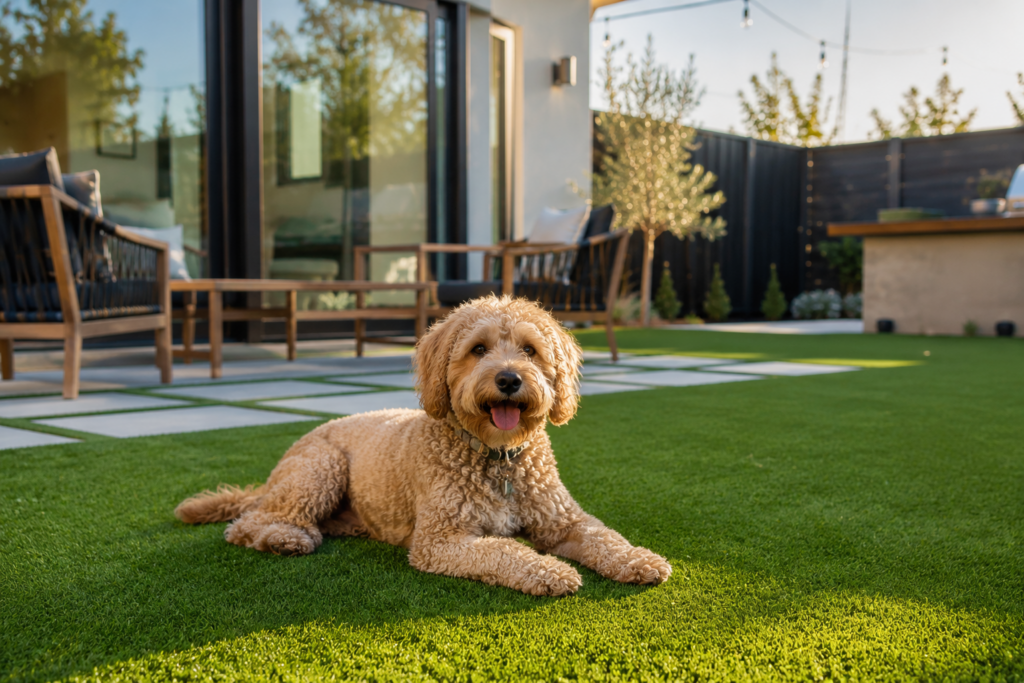
Yes, and this is actually one of the most common reasons homeowners come to us. Modern turf drains effectively — pet waste drains through and the surface is easy to rinse. Dogs who have turned a lawn into a dirt and mud situation are one of the clearest cases where turf makes sense.
For kids, the cushioned surface is soft — often more forgiving than hard-packed natural grass in dry conditions. It stays green and usable year-round, which means the backyard actually gets used.
What Does the Installation Process Look Like?
We start with demo of the existing lawn and vegetation, then do the base prep — grading for drainage, compacting the base material, and making sure everything is set up correctly for the long term. Then the turf goes down, gets secured, trimmed, and infilled.
Most residential turf projects are completed in 2 to 4 days. We clean up at the end of each day. The yard is ready to use as soon as the job is done.
Is It Worth It?
For the right homeowner and the right yard, absolutely. The clearest cases are: dogs that have destroyed the lawn, a yard that dies every summer regardless of how much you water it, families who want to actually use the outdoor space without the maintenance, and homeowners who are tired of the ongoing time and cost of lawn care.
It’s not the right answer for every property or every situation. When we do your estimate, we’ll tell you honestly whether it makes sense for your space — and if it doesn’t, we’ll tell you that too.
Call us at (408) 515-2525 or visit alexandersons.com to schedule your free estimate. We serve Campbell, San Jose, Los Gatos, Saratoga, Cupertino, and the surrounding South Bay.
Welcome to the
Alexander & Sons Blog
From patios to driveways, your source for expert concrete and hardscape advice in Campbell, Los Gatos, Palo Alto, and beyond.